
Please Note: Clicking on an image will take you to a higher resolution version of the image you clicked on.
2024-09-02: My wife and I have been working on trying to solve a problem of fitting two twin beds into a small room for our two boys. We keep coming back to bunk beds, but as an almost 6' guy, my experience with bunk beds was always rather annoying due to the problems of sitting up. You either hit the ceiling or the bunk above you when you try to do anything. Not particularly pleasant. There is a distinct possibility that my two sons may turn out similar to me in their height. I'd rather they not have to experience this annoyance if possible.
One of the ideas I found was THIS PAGE. It is a beautifully made corner bunk bed. I liked that idea a lot, but I am not particularly blessed with woodworking skills. My skill set tends to lean toward machining & welding of steel. My wife said that the bed may have to come apart at some point. I pointed out that there are portable bandsaws and angle grinders. She countered with fire-hazards and added the possibility of too much weight from an overbuilt bed damaging the floor. I stumbled in the conversation at this point; on one hand being impressed at my wife knowing how I build things and on the other hand simply not knowing how to prove her wrong. Sigh... we'll keep looking!
My wife found THIS PAGE and THIS PAGE. This fits in with my woodworking skill level, but I quickly spotted a couple odd design choices and mistakes in the plans. The stairs were something that stuck out to my wife. I built a model in solidworks. I had a brain-shower of ideas and modified the stairs into a nice desk/work area. We measured the room and discovered there isn't room for the stairs or a chair to make it a desk. Sigh... We'll keep looking.
And then my wife found THIS PAGE. You notice a pattern here? My wife keeps finding all the ideas and I keep finding nothing. But this is definitely my style! overbuilt and solid. I liked his bedframe box, but lack his garage full of tools. There are a couple of odd choices though: those screw on side stairs aren't going to last really long, in my opinion. And he charges for the plans, but he has a video! Hmm... Skill level - Doable. Head banging - not quite!
And we have to consult GOVERNMENT REGULATIONS as well! Found that out when designing/building some playground equipment a few years back. (I'm not going to say that everything that is on this page obeys all the regulations in the link above; I've done my best, but based on past experience, I would say that I probably missed something somewhere! You've been warned! Do your homework!)
After nearly 9 months of searching and finding junk steel tube beds at stores and poo-pooing on other peoples' plans, it is about time I come up with something better! (its ok - you can laugh at that! My wife did!)

Ta-Da! Here you go! 3 days of playing around in Solidworks brought me to this design. It fits the room. It seems fairly solid! And it mostly solves the hit-your-head problem! (hmm I seem to have left a random extra board in the back corner of my render. Please ignore it!)
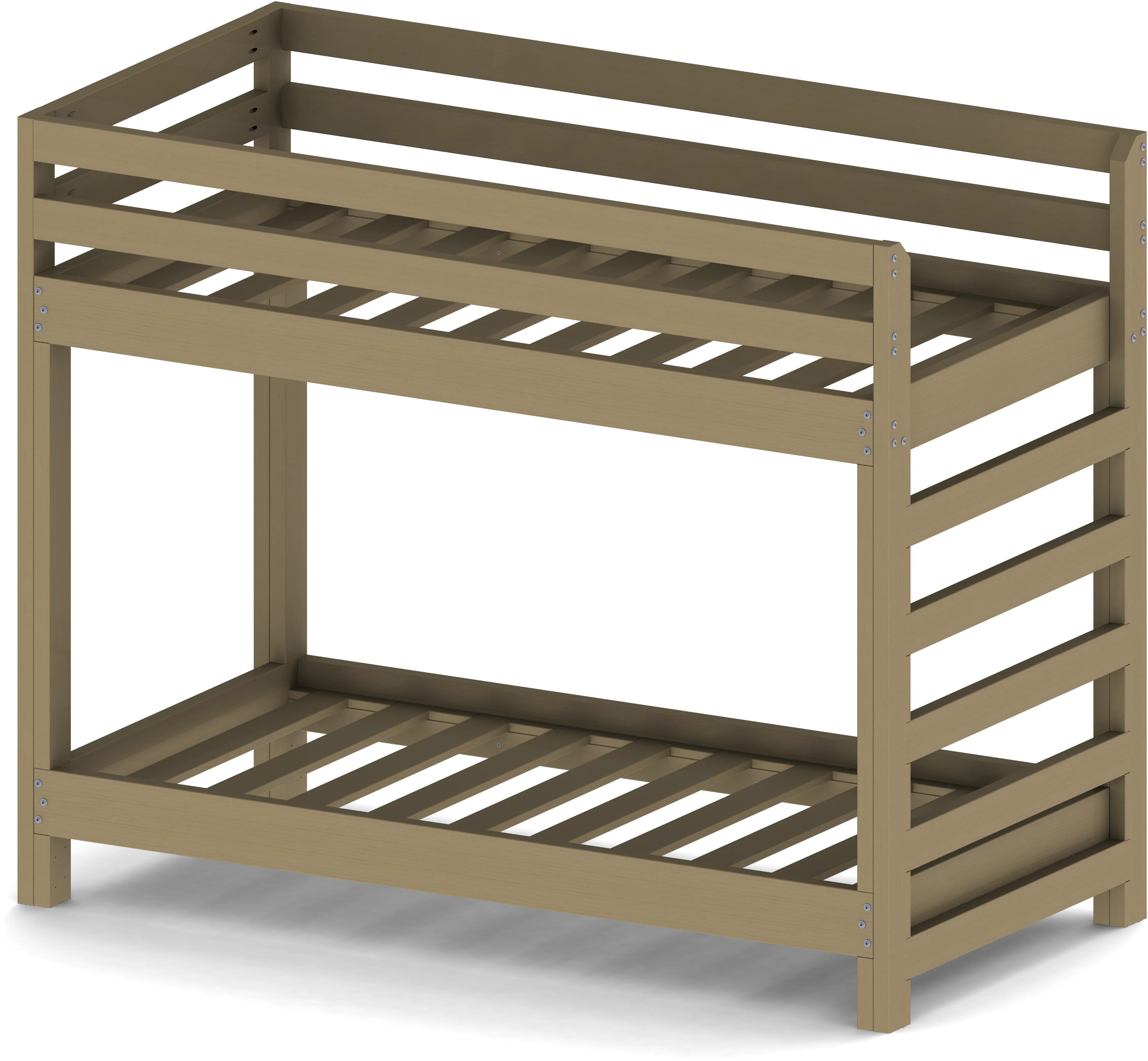

As a benefit, you can convert it to some other designs fairly quickly - If you want a standard bunk bed, just rearrange the bedframe boxes and add supports. If you want ladder ends on both sides, just duplicate the ladder end and attach! This page (and plans) do not include any directions on how to make a standard bunk bed; You should be able to figure out the missing pieces fairly easily...
BEDFRAME
The bedframe box is the core of this design. It is based on the size of twin mattress with just a little room to spare around the outsides. The bedframe box design can be downloaded here. (PDF, 2 Pages, 93KB) Only basic tools are needed: Miter Saw, Drill, Impact Driver and Finish Nailer.

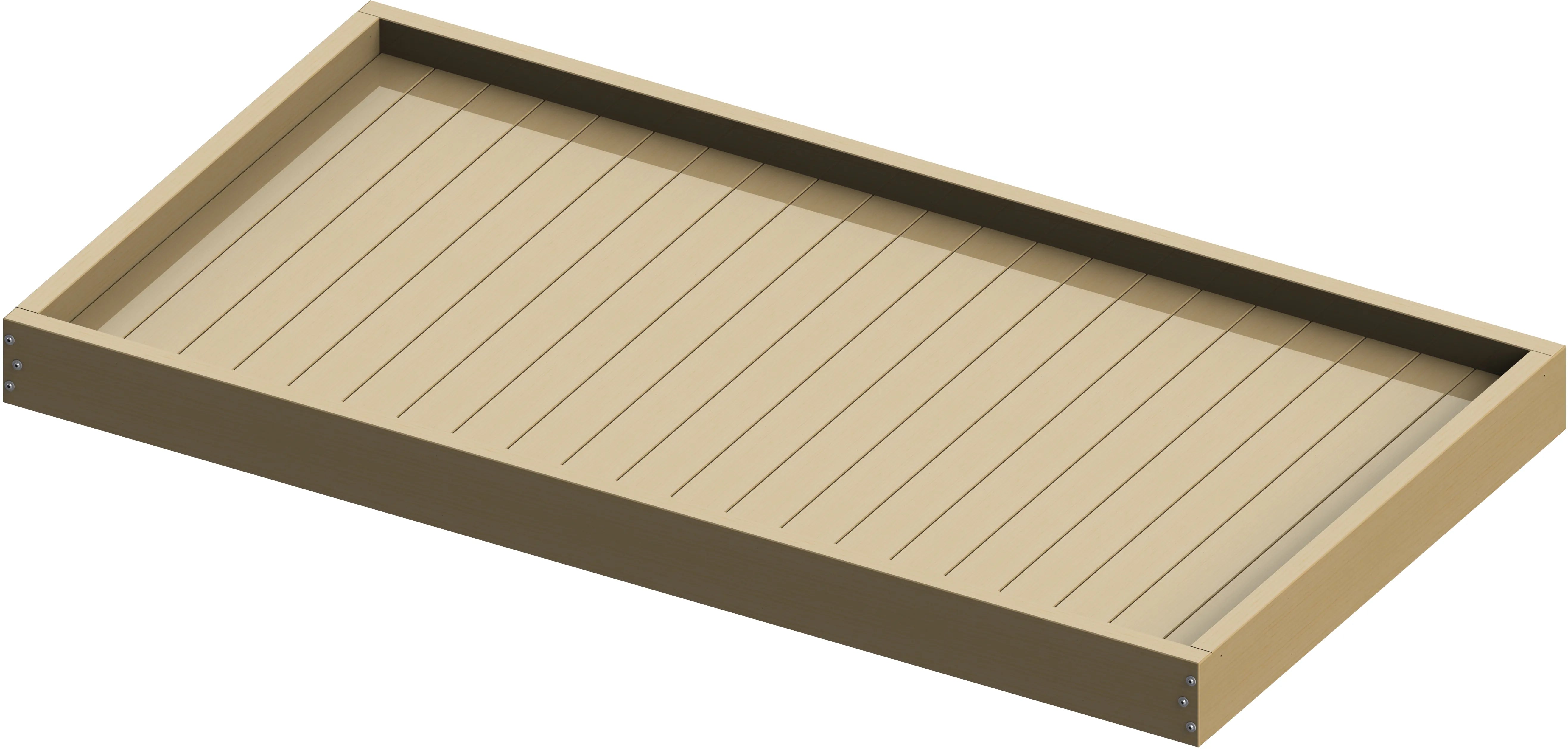
Your choice of a slotted design or solid bottom design.
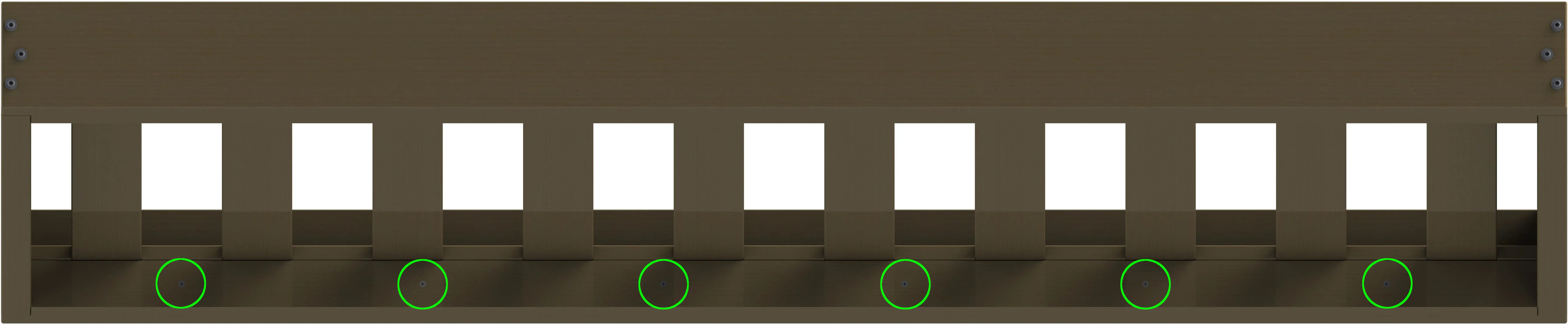
2x3" board (which supports the slats) is held in place by 6 #9x2.5" screws on each side (circled in green). Two structural screws enter the 2x3", one from each end (not pictured). You can substitute a 2x2" instead of a 2x3" if you want a little extra depth in the box.


Corners are held together with 3 (12 total) GRK 96005/14225/12225 5/16" x 4" Structural Screws.

During final assembly, there are 3 additional structural screws that fasten the uprights to the bedframe. Two (green highlight) are spaced to go into the 2x6" in between the other screws. A third (blue highlight) goes into the 2x3". There is also one additional #9 x 2-1/2" screw (red highlight) that goes from the inside of the bedframe into the upright. This last screw is a simple one to install first to hold everything in place before you drive the structural screws.
Materials list for Bedframe:
- 3x 2x6"x8' Pine Boards
- 2x 2x3"x8' Pine Boards
- Either 5x or 11x 1x4"x8' Boards
- 12x #9x2-1/2" Screws
- 12x GRK 96005/14225/12225 5/16" x 4" Structural Screws
LOWER BED
The lower bed design can be downloaded here. (PDF, 5 Pages, 98KB)
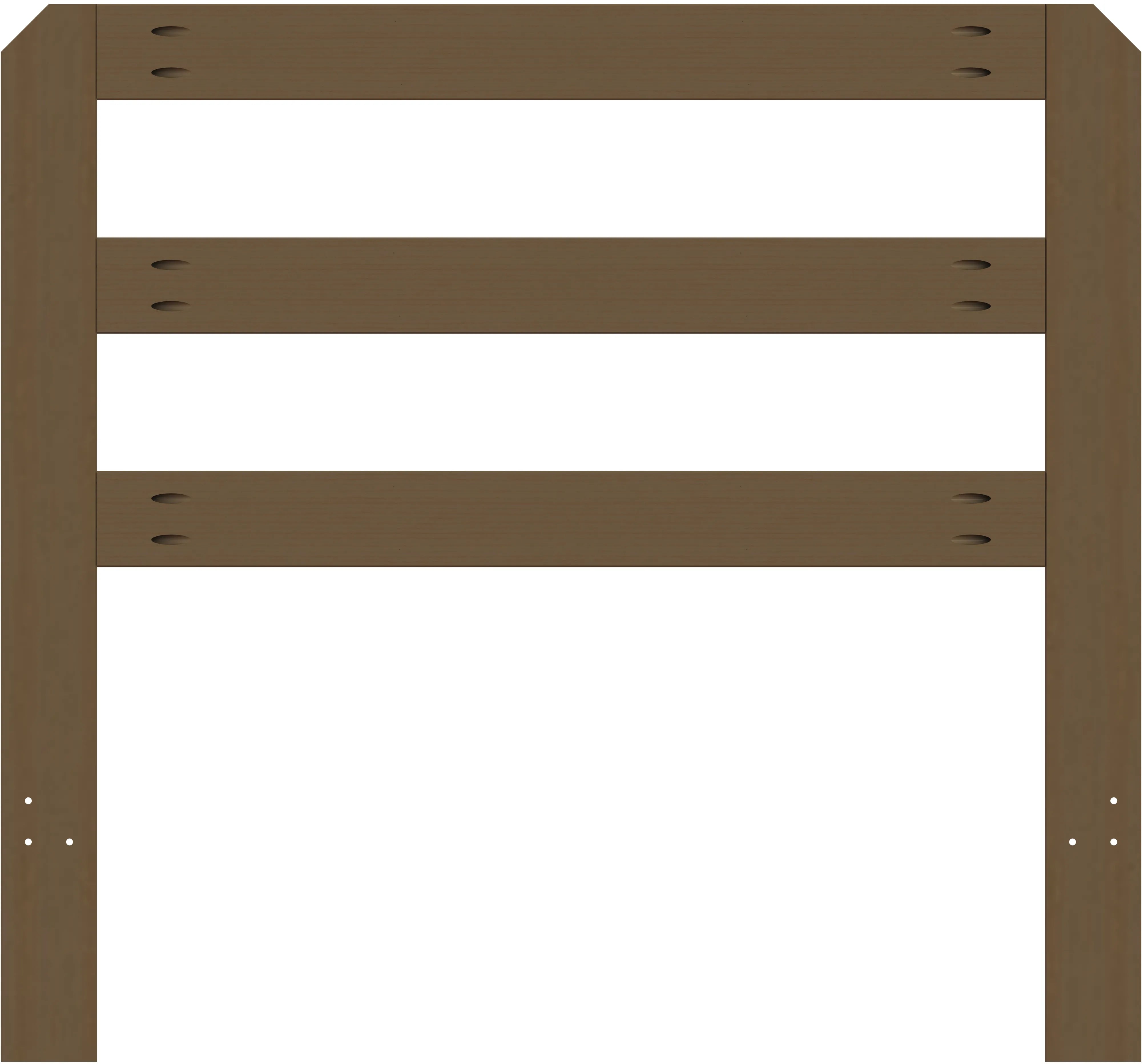
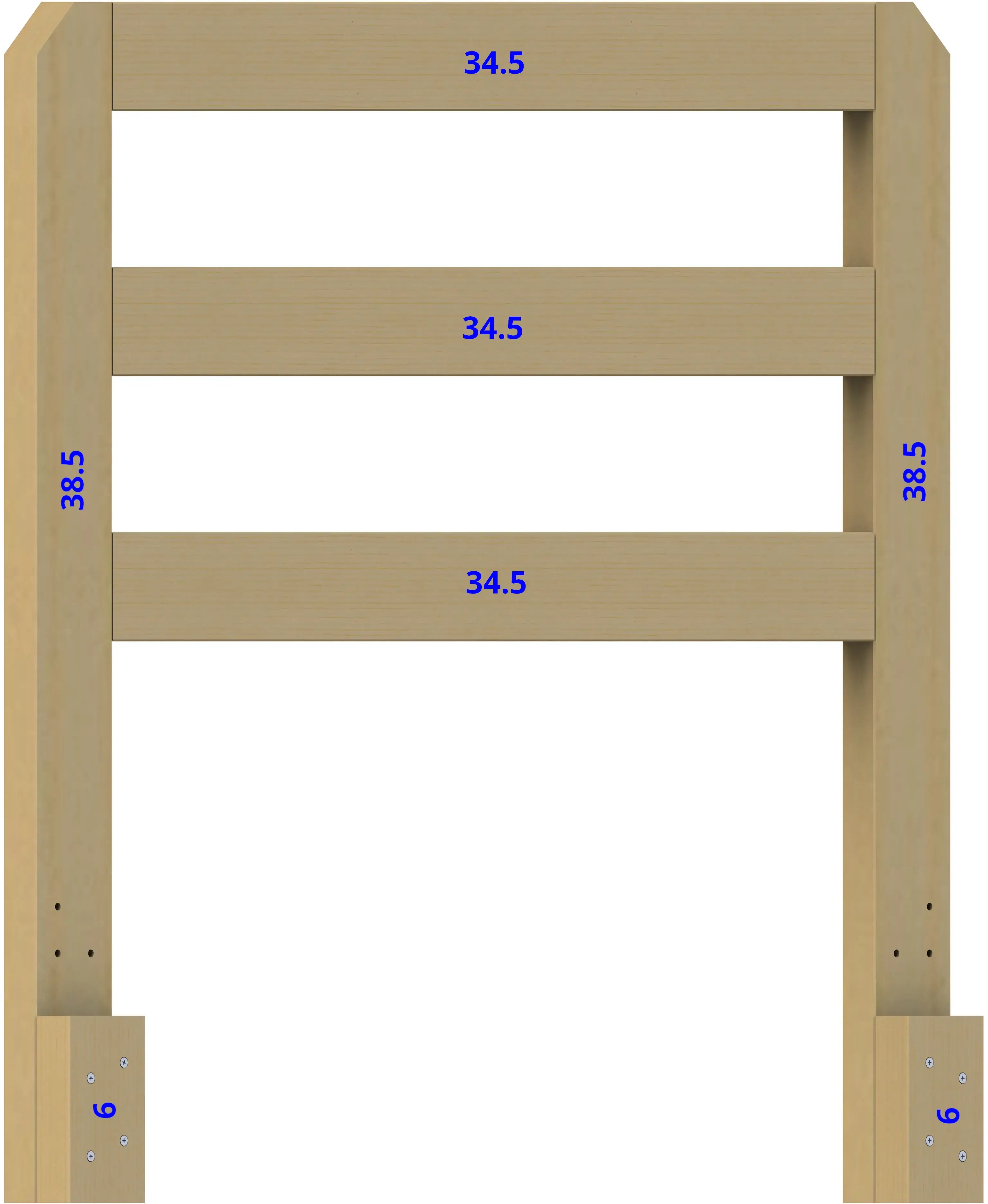
Headboard renders. Up to you if you want to put the angled screws on the inside or outside. I purchased a new tool, a Kreg R3 Pocket Hole Kit, to make these holes. It is a lot more consistent than attempting to hand drill every hole!
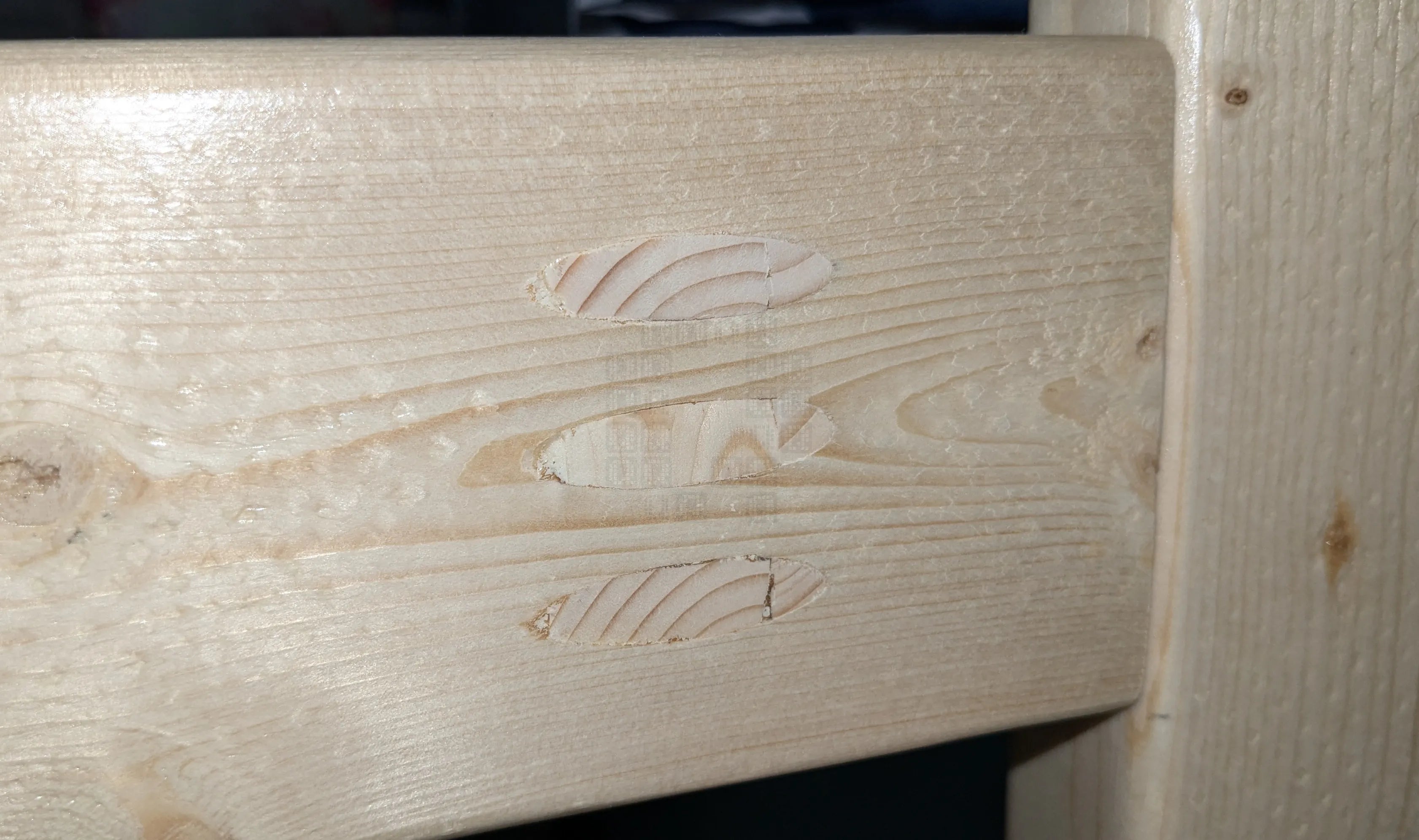
I did attempt to use plugs to fill the screw holes. Up to you if it is worth the extra work. Shameless plug for IRWIN PLUG CUTTERS we sell. (see what I did there?)
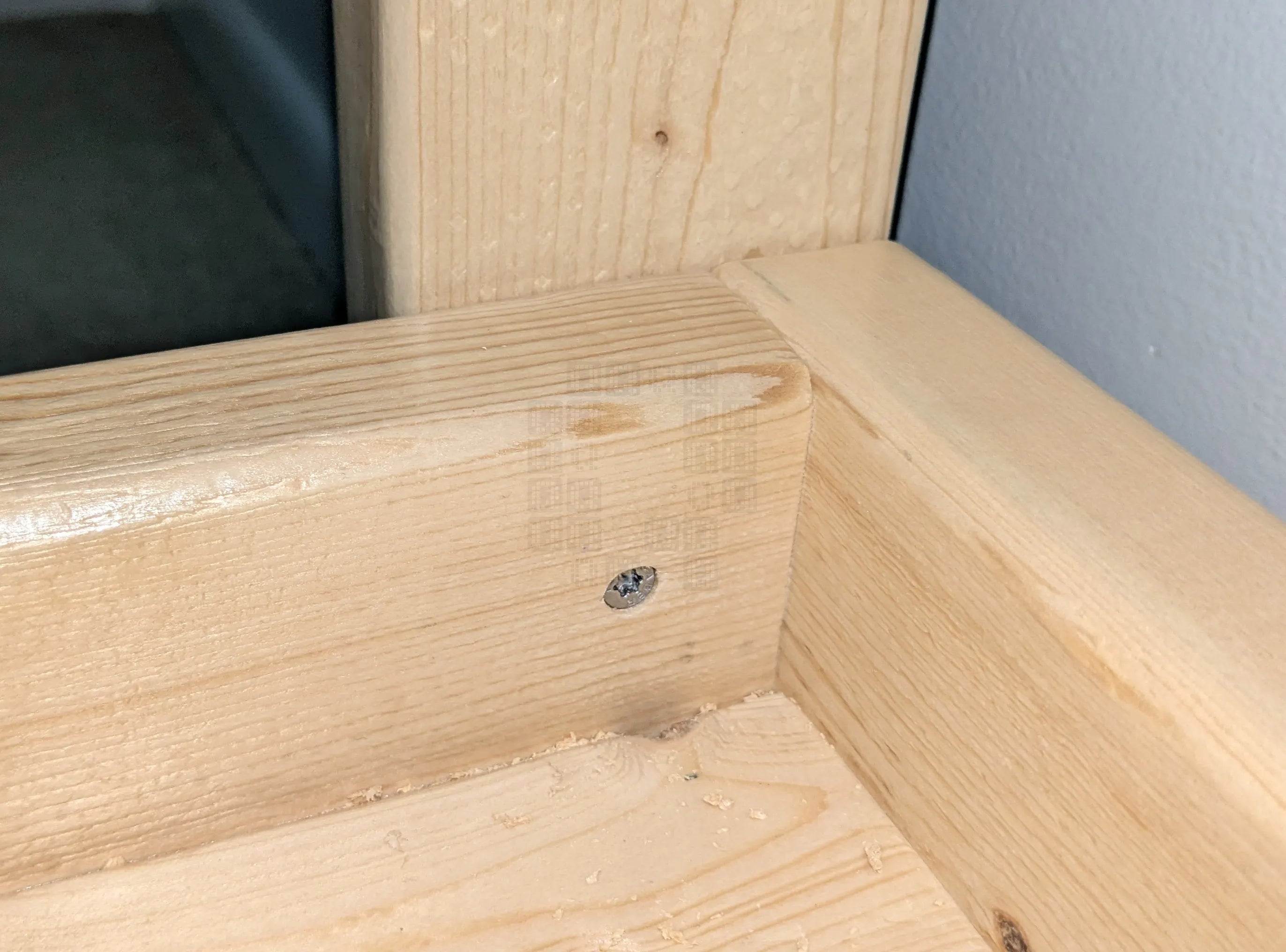
Rough location for the inside screw. (a more precise location is specified in the plans) This is the same for all corners of the bedframe that get connected to outside supports.

This piece doubles as the one corner support of the lower bed and also a center beam support for the upper bed. An angled screw is used to fasten it to the upper beam. When making this part, I forgot to take into account that my structural screws on the bedframe stick out an 1/8" or so. I had to go back and make a slight recess for each of the screws in this support so that the support would sit flush against the bedframe. (same thing happened on the opposite stair end 2x4" that ended up back in the corner of the room... it needed recesses too)
Materials list for Lower Bed:
- 3x 2x4"x8' Pine Boards
- 38x #9x2-1/2" Screws
- 9x GRK 96005/14225/12225 5/16" x 4" Structural Screws
- ...Plus all the pieces needed for the bedframe!
Upper Bed
The lower bed design can be downloaded here. (PDF, 6 Pages, 98KB)
For the upper bed, I'll start with the stair end first. If you want, you can build two of these and put them on both ends of the bed instead of just one end.
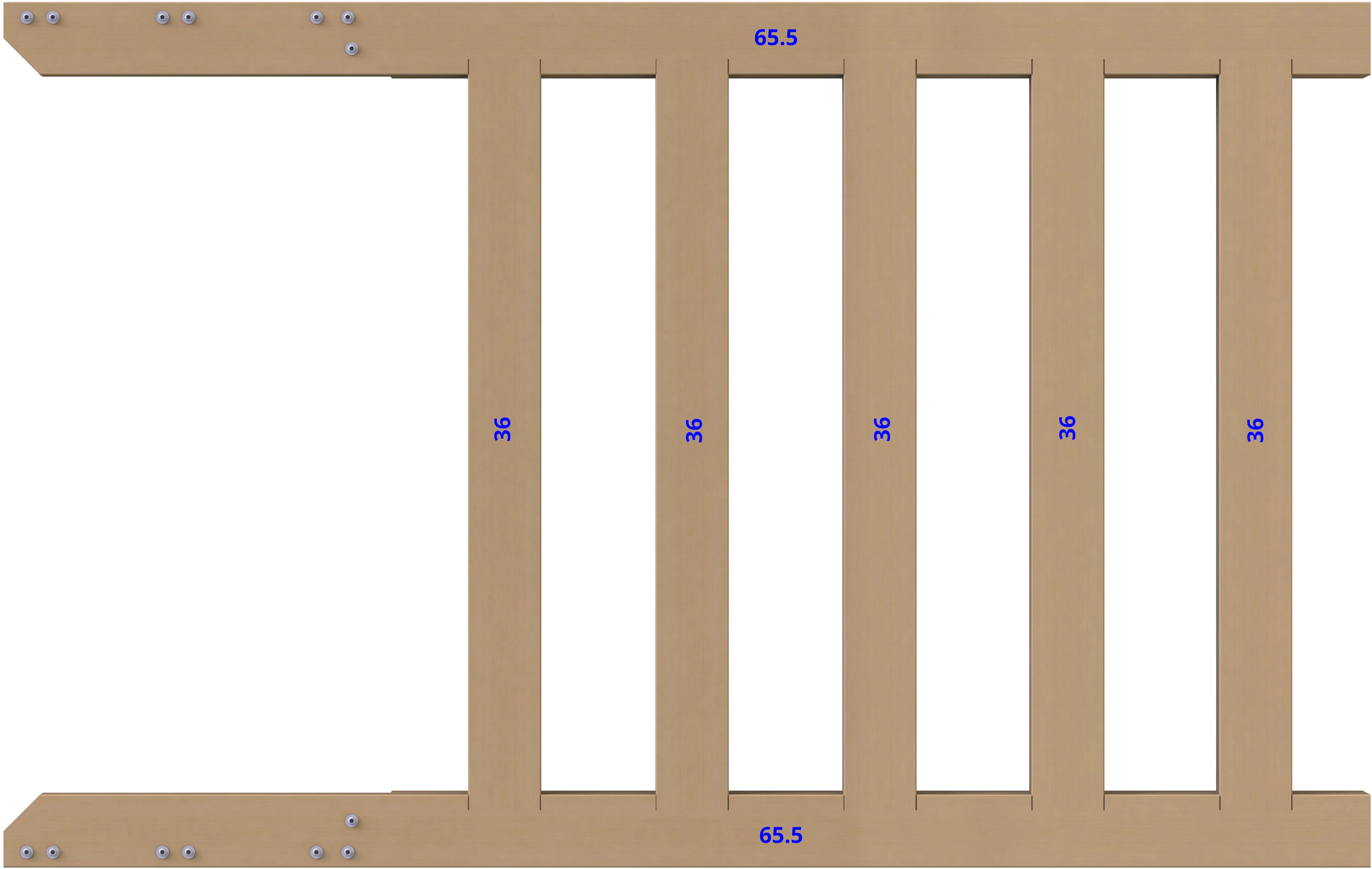
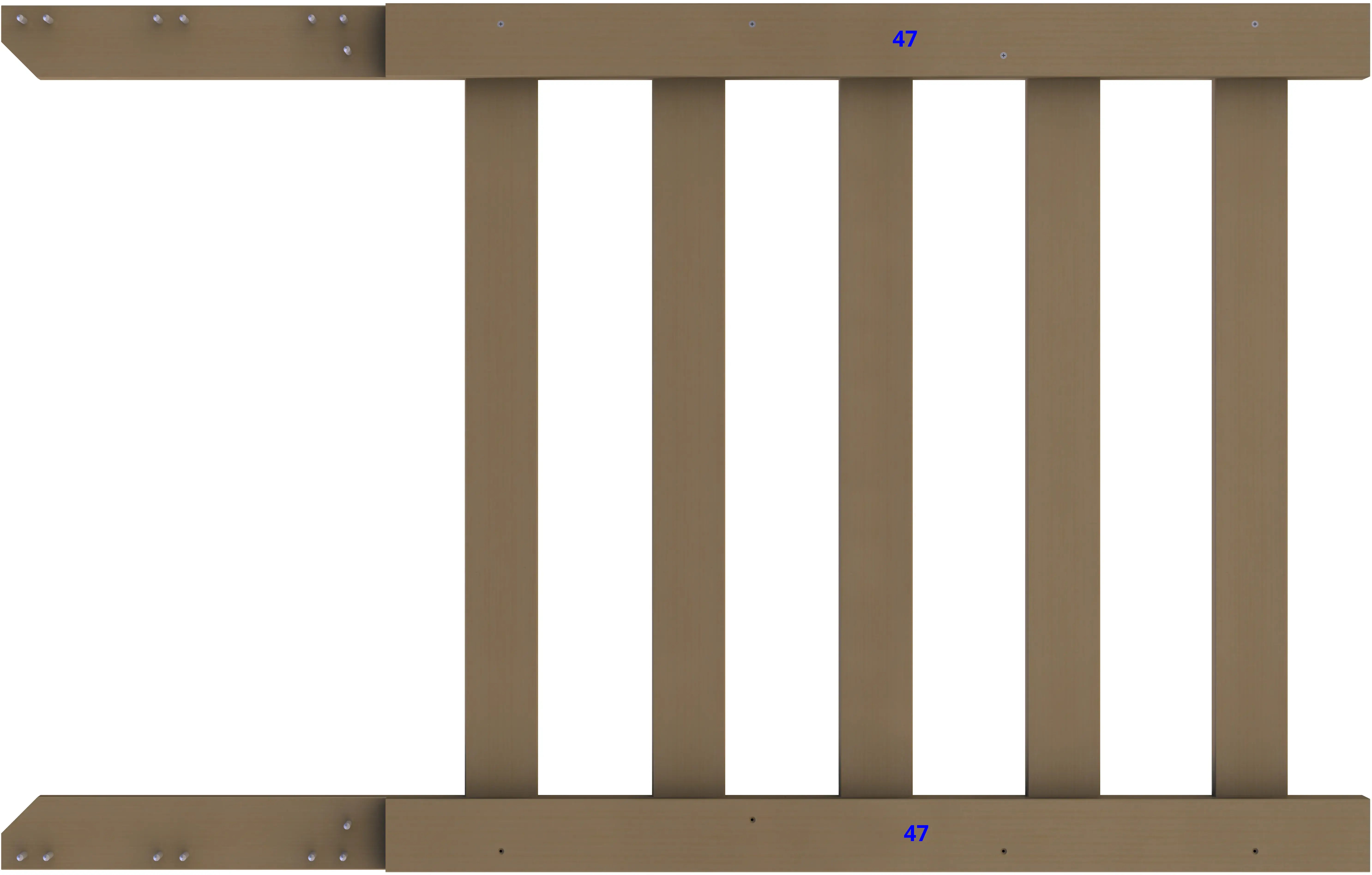
Two renders of the stair end. The 47 inch pieces are there to support the upper bed frame and provide back support for the stairs.
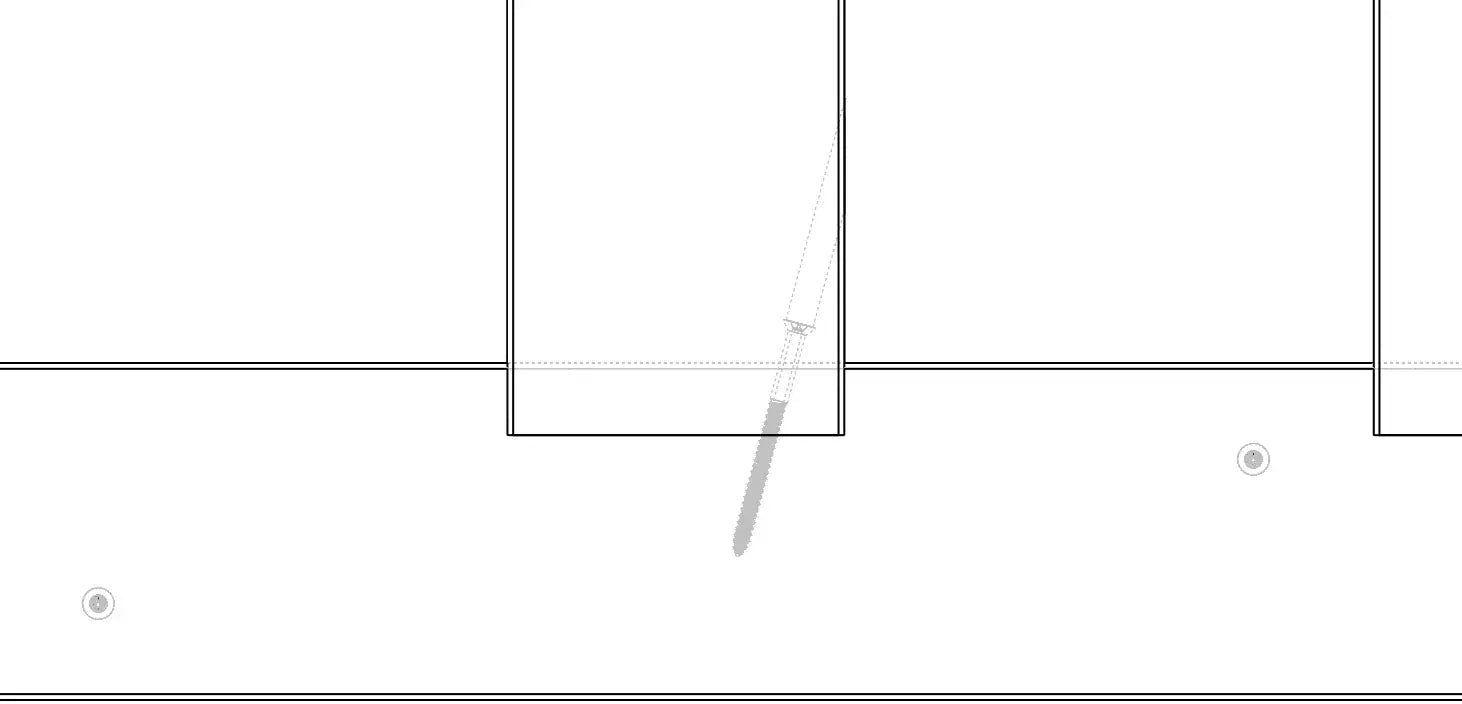
Angled Screw going into the bottom of each stair rail. The Kreg R3 Pocket Hole Kit makes another appearance here. I used a 3" screw here, but you can probably get away with a 2.5".

47 inch 'Kickboard' to keep the stair rails from being kicked/pushed out.
I've seen a couple too many bunk stairs damages and broken, so I attempted to make the stair rungs a little stronger than typical. First the 65.5 inch pieces have 3/4 inch notches cut in them. This hopefully makes it that any downward forces are transferred into the vertical 2x4 instead of stressing screws. I also have the 47 inch pieces on the back acting as a kickboard to keep the 36 inch stair rails from getting out of place. Finally, the screws are angled up and out from the bottom to provide basic stability. (on further thought, it might have made a bit more sense to run them in from the top so that they pull the stairs down against the bottom of the notch instead of slightly up from the bottom)
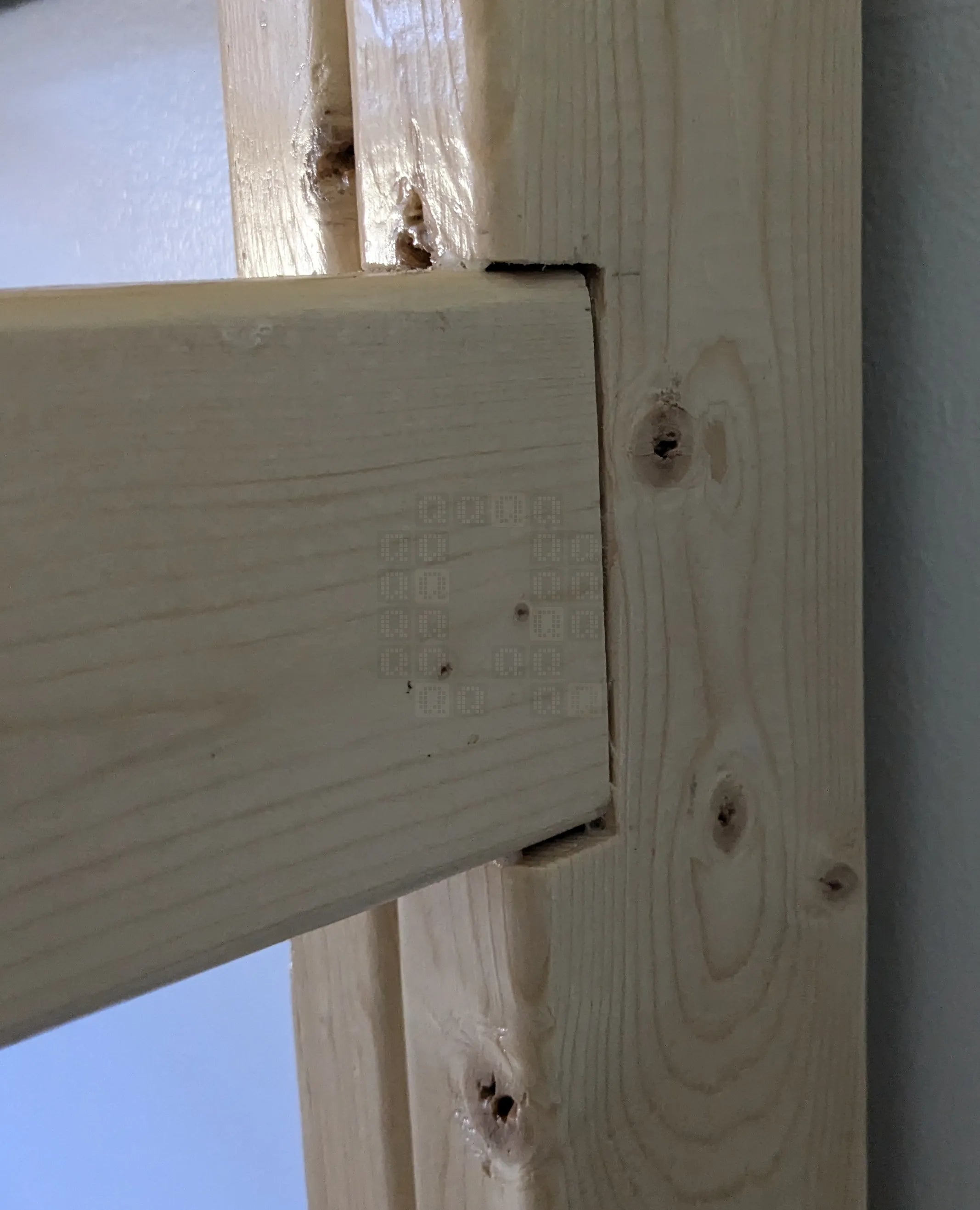
This is how my finished stair rails look. I had them pretty snug and glued the ends and backs.
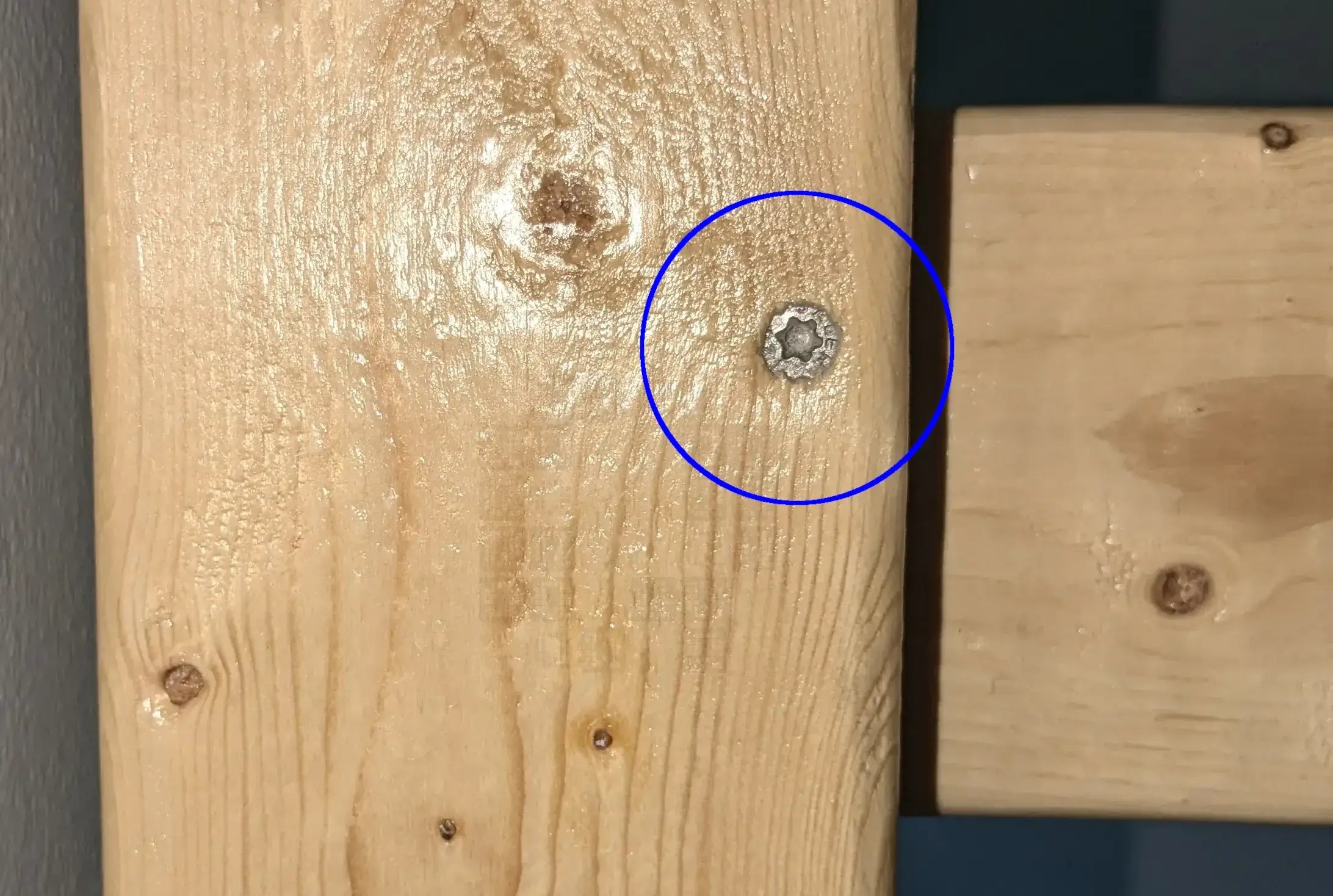
I also forgot to model the extra screw I put in from the back (bed) side of the stair end. This should provide just a little extra peace of mind by securing the steps in one more direction.

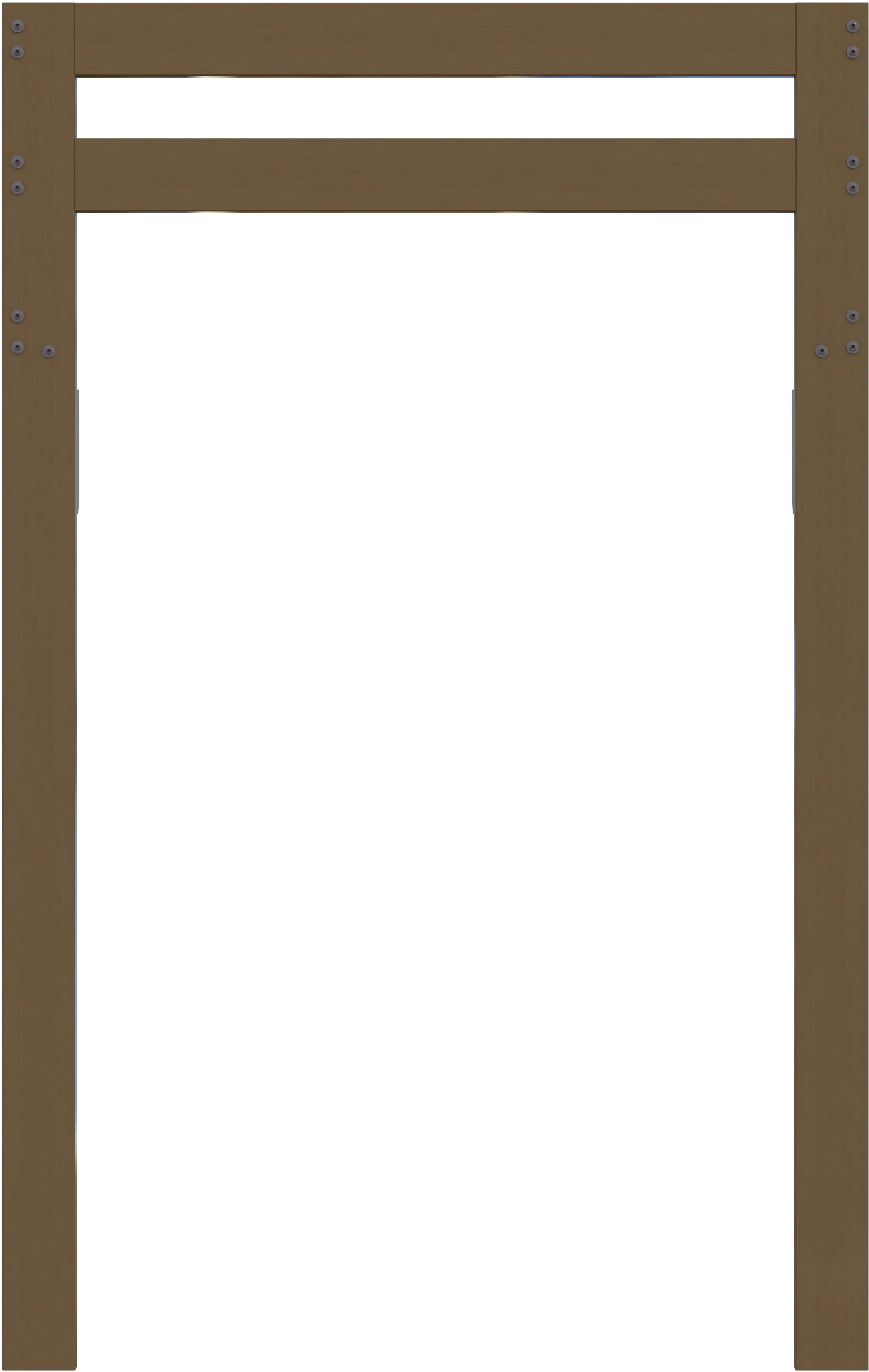
Opposite Stair End Renders. I have the two 6" support blocks listed on the plans, but I don't show that I cut a nice angle on them to prevent sharp edges.

and don't forget to cut 4 of the upper rails for the upper bed out of 2x4's. They get attached by structural screws to the ends.
Materials list for Upper Bed:
- 13x 2x4"x8' Pine Boards
- 22x #9x2-1/2" Screws
- 28x GRK 96005/14225/12225 5/16" x 4" Structural Screws
- ...Plus all the pieces needed for the bedframe!
Finished Bed:
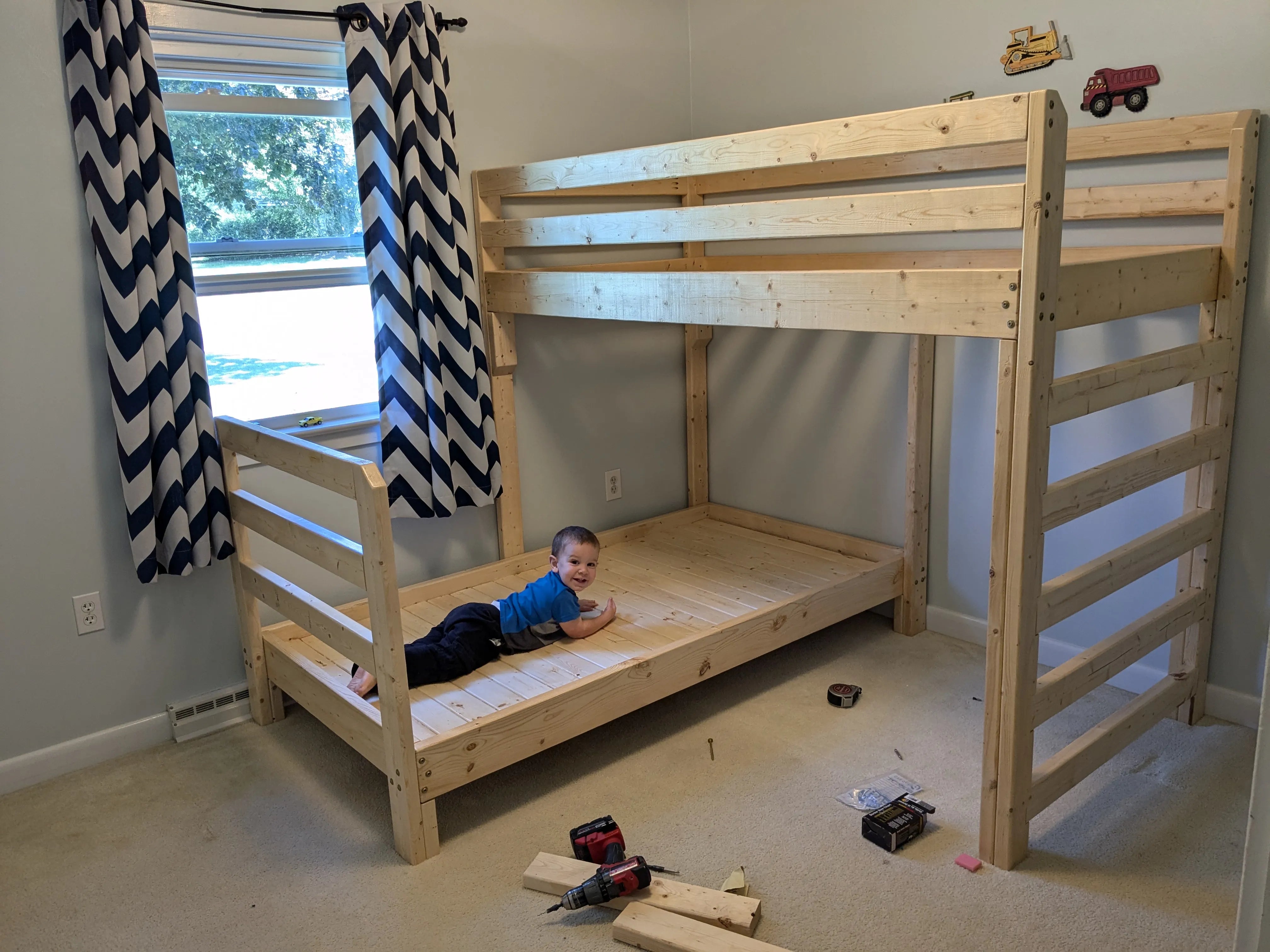
I normally try to avoid posting personal images, but this is literally the only image I have of the finished bed [mostly by itself]. 4 kids were quickly climbing all over the bed and using the upper bed as monkey bars (use a solid bedframe to prevent this!). This continued far longer than expected and didn't stop over the next couple days as we put the room back together. My wife did the finishing of this bed and chose not to stain it and finish it with ZAR Poly Crystal Clear Satin (1 gallon is PN 34413 if you want to look for it). My personal opinion is that it turned out quite nicely! In a couple years, we'll know how well we did building it!
Download Links:
STEP (AP214) File of Project (ZIP 613KB)
Bedframe Box (PDF, 2 Pages, 93KB)
Lower Bed Design (PDF, 5 Pages, 98KB)
Upper Bed Design (PDF, 6 Pages, 98KB)
Disclaimer:
These plans are offered AS IS and WITHOUT ANY WARRANTY OF ANY KIND. If you chose to use these plans in any way, you accept any and all liabilities. Quagmire Repair LLC and David Mellinger (We) will not accept any responsibility for your use of these plans and/or for any damages, injuries or losses resulting from your use of these plans. It is your responsibility to verify these plans and to make sure that these plans follow all of your local laws and regulations. We cannot be held responsible for your inability to follow these plans or for your inability to construct a safe piece of furniture in accordance with generally recognized safe practices and laws. Any employee or owner of Beiler Hydraulics, Inc and its subsidies, past, present or future is explicitly NOT AUTHORIZED to use these plans in any way, without first having obtained written consent from Quagmire Repair LLC and David Mellinger.