
Please Note: Clicking on an image will take you to a higher resolution version of the image you clicked on.
2026-07-04: It started with my Dad finding a bag of Elenco snap circuits at Goodwill. Then it continued with my son refusing to read the directions and attempting to build circuits. And it stopped at the point where he repeatedly created a direct short and then got mad because it wouldn't work anymore. At which point he tried to blame the set for breaking, even though I had tested every piece before showing him the basics and letting him explore.
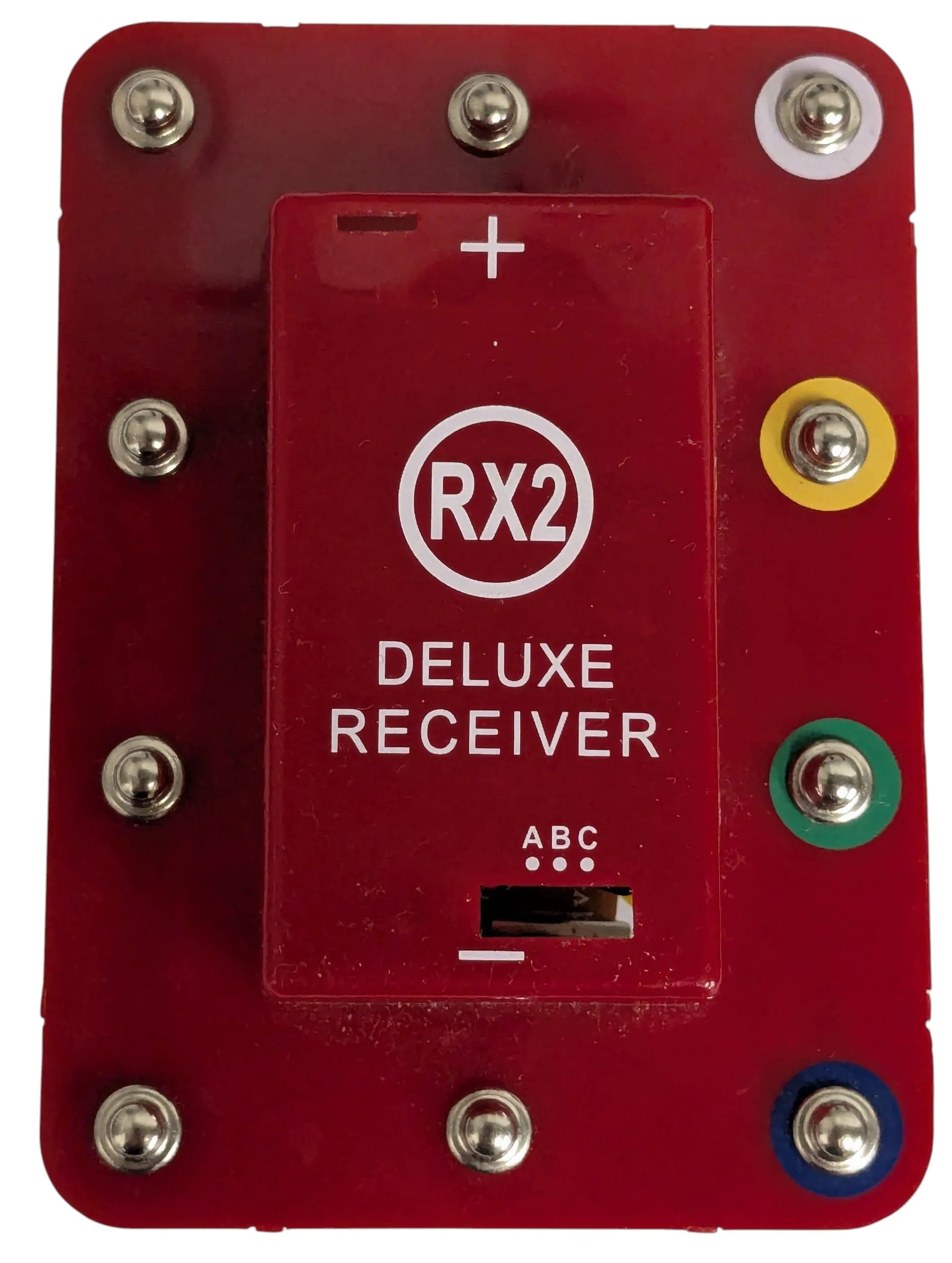
At this point, I was handed this part... which I promptly handed back to him to have him build the test circuit. Once that was done, we troubleshot it, pulled out the multimeter and came to the conclusion that the green and blue terminals each had a shorted to negative problem (huh! Wonder how that happened? "I don't know...") At this point, the first lazy idea is to get a replacement... (Link to official replacment part +$12 S/H) Uhh... not going that route. (checking eBay - even worse) or that one... Hmm. Wonder what it looks like inside?
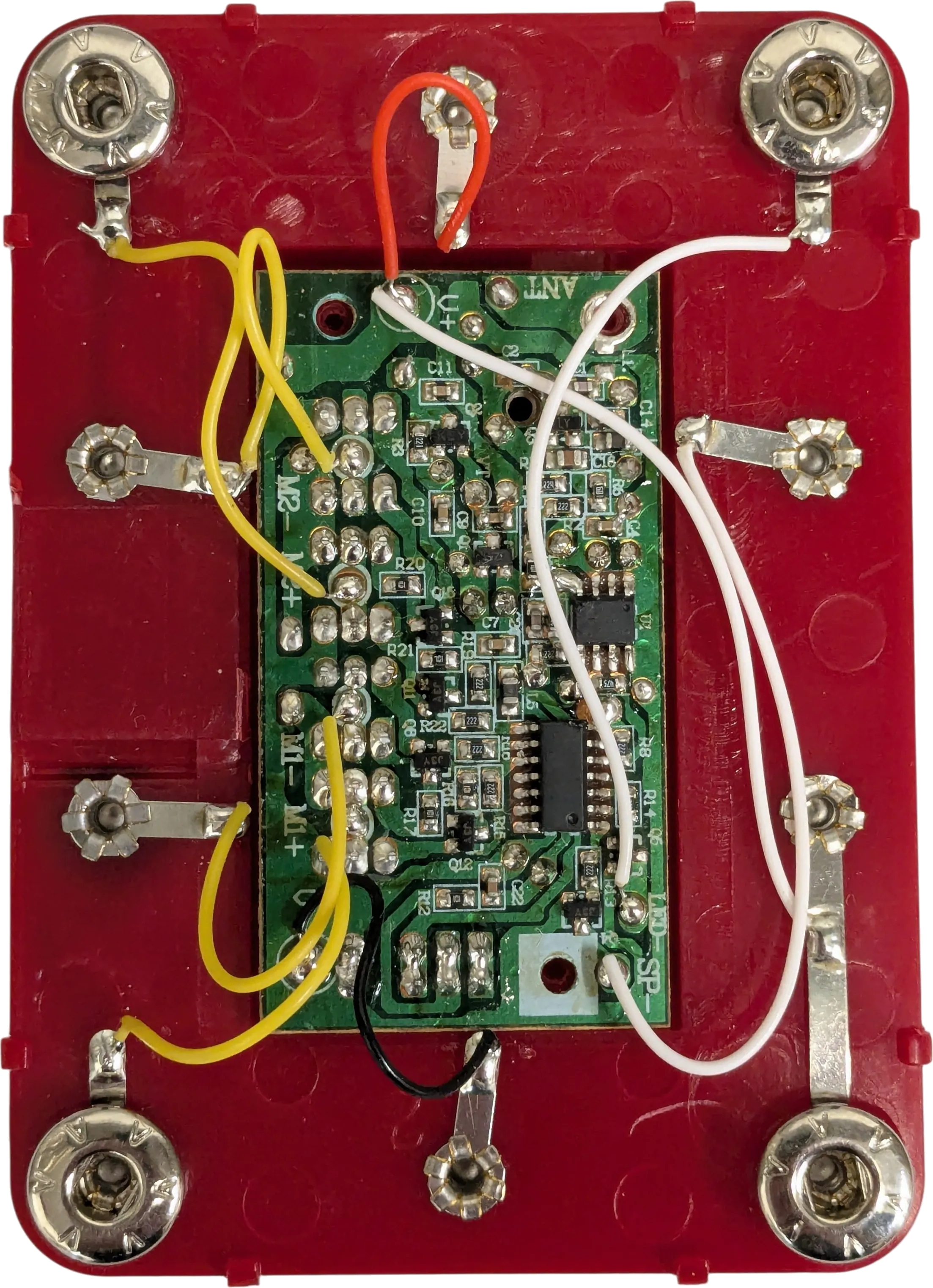
After realizing that the back literally snaps on, it was a simple matter to get it removed. The surface mount components always worry me a little, but the through hole components look promising...
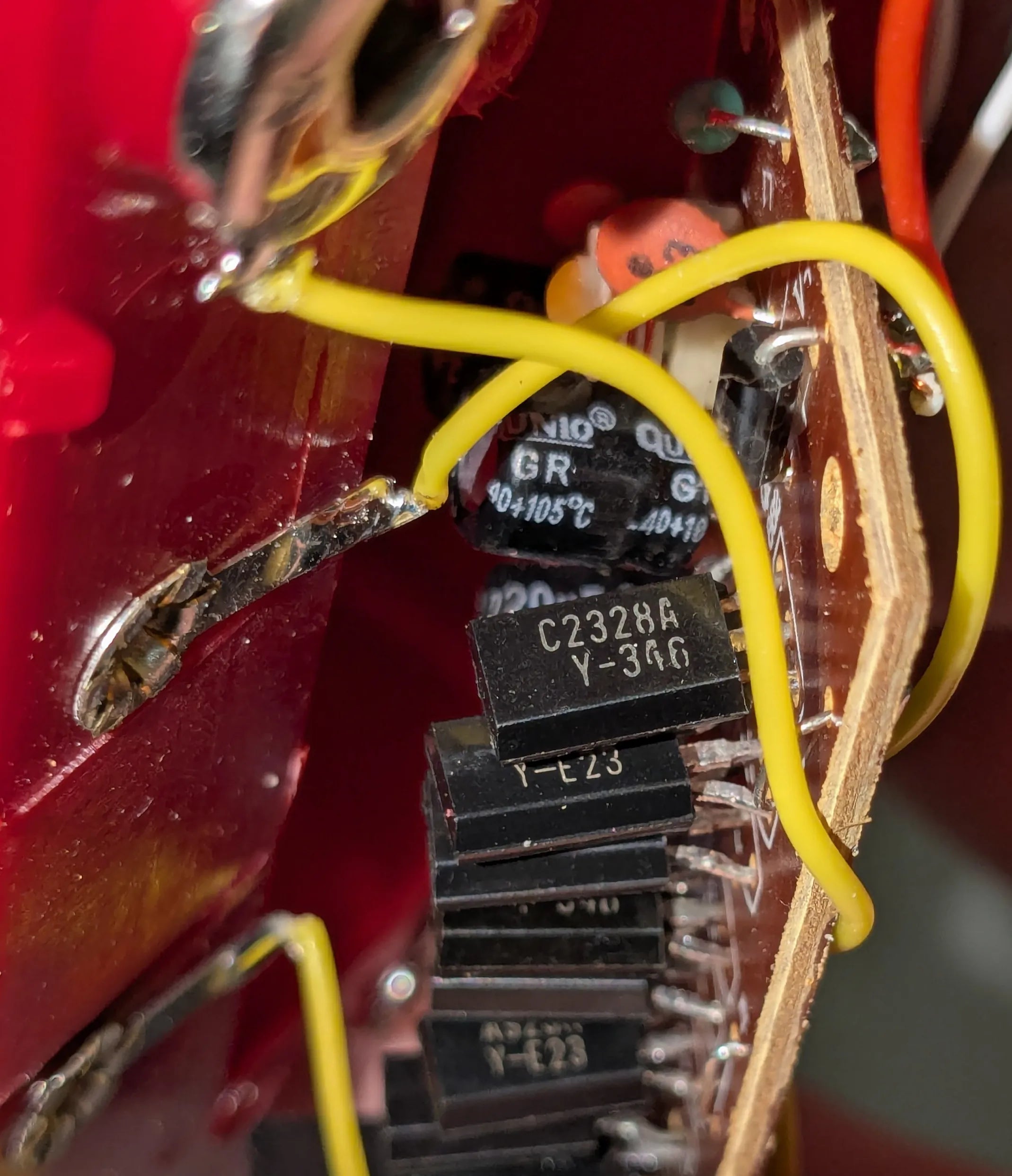
Oh, look - some nice transistors! Arranged in an H-Bridge too! This should be easy!
A little more investigation revealed that the '2SC2328A NPN Audio Power Amplifier Epitaxial Silicon Transistor' and the '2SA928A PNP Audio Power Amplifier Silicon Transistor' used in this unit are a little hard to locate. And what exactly does 'epitaxial' mean?
A couple days later, I came up with a solution; stop searching for '2SA' and '2SC'. Order KSC2328A and KSA928A from Digikey (not affliate links). Then wait for the parts to arrive.
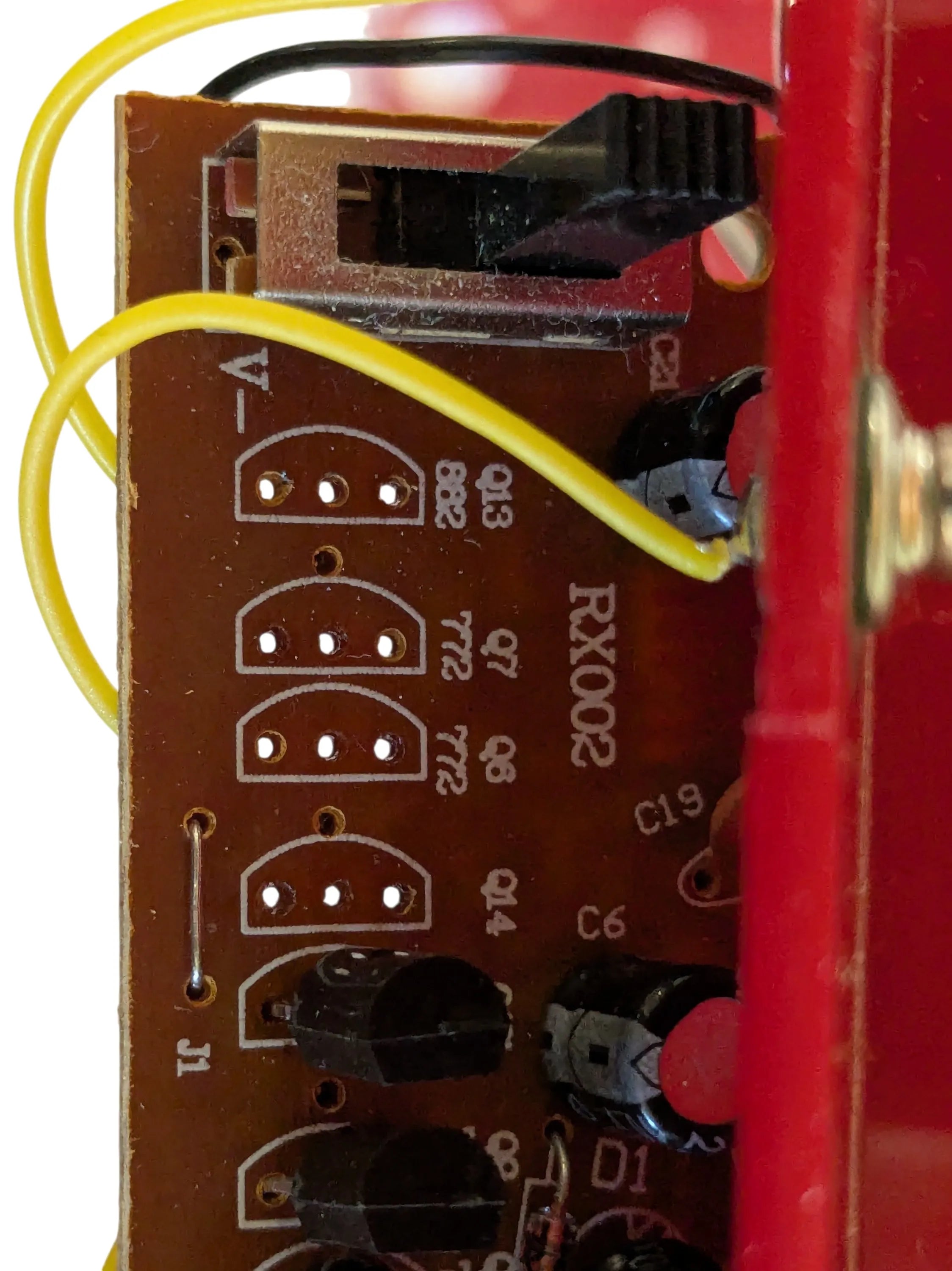
It was at this point (right after removing the old transistors) that I realized I could have used different parts, 2SB772 (or KSB772) & 2SD882. They have better thermals and higher peak amperage. Oh well - too late! At least they have nice markings on the circuit board and consistent component direction! A quick solder job (4 transistors replaced - These should be matched sets) and re-assembly and this part now works again. One glaring ommission on this board seems to be the lack of any current limiting devices. I briefly toyed with the idea of adding a resettable fuse (PPTC) in place of the power wires, but gave up the idea after realizing I probably didn't have the right size here. I'd definitely like to prevent the same problem from happening again if possible.
As far as cost goes, this is definitely the least expensive option, except for the research/labor part. Hopefully this short post will save someone else a little time and get the younger creative minds back on their learning and exploring!